FDA-Cleared TMJ/TMD Treatment in Riverview, FL: A Non-Invasive Approach to Jaw Tension

Updated: Aug 14
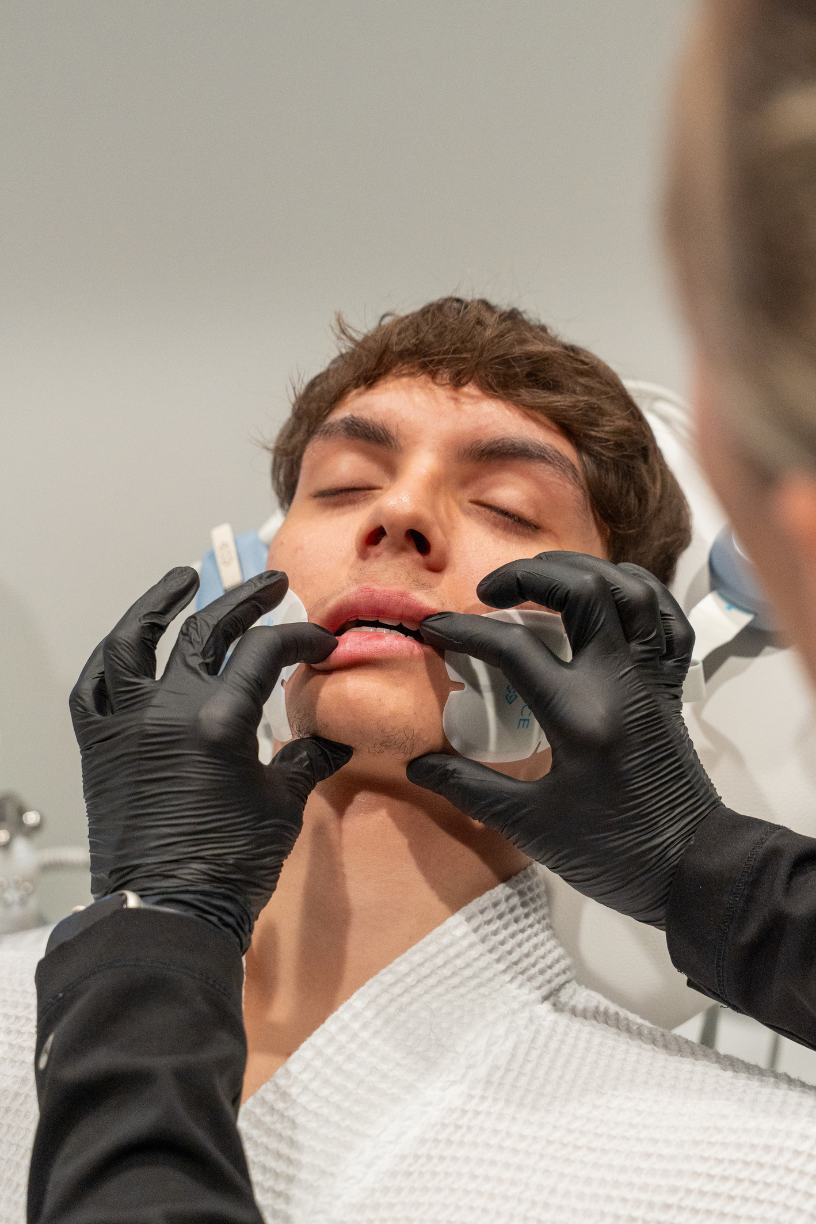
If you regularly wake up with a sore jaw, catch yourself clenching your teeth throughout the day or notice clicking and tension when you chew, you already know how frustrating jaw discomfort can be.
Maybe you've tried a night guard. Maybe you've seen a dentist or physical therapist. Maybe you've simply learned to live with the tension because nothing you've tried has provided the lasting comfort you were hoping for. If you're dealing with TMJ or TMD symptoms in Riverview, FL, there is another non-invasive option worth learning about.
At Aesthetic Edge Skin + Wellness, we offer an FDA-cleared treatment designed to address muscle spasm associated with TMJ dysfunction and associated pain. The treatment uses targeted muscle stimulation to address the muscles involved in jaw function without needles, surgery or downtime.
And because the treatment is designed for the muscles of the jaw, it can be an especially interesting option for people whose symptoms are associated with muscular tension and overactivity.
What Are TMJ and TMD?
You've probably heard the terms TMJ and TMD used interchangeably, but they aren't exactly the same thing.
TMJ refers to the temporomandibular joint itself. You have two of these joints, one on each side of your face, connecting your lower jaw to your skull.
TMD, or temporomandibular disorder, is a broader term used for conditions affecting the jaw joints and the muscles responsible for moving the jaw. TMD can involve the muscles, the joints or both.
Common symptoms can include:
Jaw pain or tenderness
Facial tension
Pain when chewing
Clicking or popping
Difficulty or discomfort when opening the mouth
Jaw stiffness
Head or facial discomfort
Muscle fatigue around the jaw
Clenching or grinding-related tension
Because TMD can have different causes, there isn't one treatment that is right for everyone. That's why understanding what is contributing to your symptoms matters.
Why Does Jaw Clenching Cause So Much Tension?
Your jaw muscles work every time you chew, speak and swallow. If you also clench your teeth during the day or grind your teeth while sleeping, those muscles may be working much harder than they need to.
The masseter is one of the primary muscles involved in closing the jaw.
When it is repeatedly activated, some people experience persistent tightness, tenderness or fatigue around the jaw and lower face.
Stress can also contribute to clenching and muscle tension. You may not even realize you're doing it until you notice that your jaw is sore at the end of the day or you wake up with facial tension in the morning.
Over time, that constant muscular activity can become a frustrating cycle.
An FDA-Cleared Treatment for TMJ Dysfunction and Associated Pain
Aesthetic Edge offers a specialized treatment using targeted electrical muscle stimulation for patients experiencing symptoms associated with TMJ dysfunction and muscle spasm.
The technology is FDA-cleared for the relief of symptoms associated with muscle spasm, treatment of TMJ dysfunction and associated pain, muscle re-education, increasing blood flow and maintaining or increasing mandibular range of motion.
That distinction is important.
This isn't simply a facial treatment that happens to be placed near the jaw.
It is a targeted muscle-stimulation treatment specifically cleared for TMJ-related indications.
For appropriate patients, it offers a non-invasive option to address muscular components of jaw discomfort without injections or surgery.
How Does TMJ Muscle Stimulation Work?
The treatment uses controlled electrical stimulation to activate targeted muscles involved in jaw movement.
During treatment, specialized applicators are positioned over the appropriate areas of the lower face. The technology then delivers controlled stimulation to the muscles.
You may feel rhythmic contractions as the muscles are stimulated.
The goal is to support muscle re-education and help address excessive muscular activity that may be contributing to your symptoms.
Because TMD is not one single condition, this treatment is not intended to treat every possible cause of jaw pain. A proper evaluation is important to determine whether a muscular approach makes sense for you.
What Makes This Different From a Traditional TMJ Approach?
There isn't one “best” treatment for everyone with TMD.
Depending on the cause and severity of your symptoms, treatment may involve a dentist, oral and maxillofacial specialist, physical therapist or other healthcare professional. Night guards, behavioral changes, physical therapy and other approaches may also have an important role.
The goal at Aesthetic Edge isn't to replace those providers or tell you that one treatment can solve every TMJ problem. Instead, we're offering another option for patients whose symptoms may have a significant muscular component.
That is one of the reasons we believe the consultation is so important.
What Can You Expect During a TMJ Treatment?
One of the biggest advantages of this approach is how simple the treatment experience can be.
You remain comfortably reclined while the applicators are positioned over the treatment area.
As the session begins, you'll feel the muscles contract rhythmically. The sensation is controlled and can be adjusted according to your comfort level.
There are no needles, incisions or surgical recovery. Once your session is complete, you can return to your normal routine.
How Many Treatments Will I Need?
Your treatment plan will depend on your symptoms, goals and how your body responds to treatment.
A common starting approach is a series of four treatments, allowing the muscles to be addressed progressively rather than relying on a single session.
Some patients may notice changes in how their jaw feels during the treatment series, while others may require additional time or maintenance treatments.
Your individual response will vary. The goal is to create a plan that makes sense for your symptoms rather than putting every patient on the exact same schedule.
Who May Be a Candidate for TMJ Treatment?
A consultation is the best way to determine whether this treatment is appropriate for you.
It may be worth exploring if you experience concerns such as:
Jaw muscle tension
Frequent clenching
Muscle-related jaw discomfort
Tenderness around the masseter area
Difficulty relaxing the jaw
Tension associated with TMJ dysfunction
Discomfort that may be related to overactive jaw muscles
However, not all jaw pain is caused by muscle tension. If you experience significant swelling, trauma, severe or worsening pain, locking of the jaw, major changes in your bite or other concerning symptoms, you should seek evaluation from an appropriate medical or dental professional.
Can TMJ Treatment Replace a Night Guard?
No. A night guard may be recommended to protect your teeth from the effects of grinding or clenching, and whether you should continue using one is a decision best made with your dentist.
Muscle stimulation and a night guard serve different purposes.
For some patients, a comprehensive approach may involve both.
Is TMJ Treatment Painful?
The treatment is non-invasive, but you will feel the muscles contract as they are stimulated.
Most people describe the sensation as rhythmic or pulsing rather than sharp or painful.
Your provider can adjust the intensity throughout the session to keep the treatment comfortable.
If anything feels uncomfortable, let your provider know.
Is There Downtime?
There is typically no downtime associated with the treatment.
You can return to your normal daily activities after your appointment.
That makes it an appealing option for patients who want to address jaw tension without taking time away from work, exercise or their normal routine.
TMJ Treatment in Riverview, FL
If you're searching for TMJ treatment in Riverview, FL, you shouldn't have to sort through endless promises about what will “fix” your jaw.
The first step is understanding what's actually contributing to your symptoms.
At Aesthetic Edge Skin + Wellness, we take a personalized approach to every treatment. We look at your concerns, discuss your goals and determine whether a targeted muscle-stimulation approach is appropriate for you.
Our goal is simple:
Give you a thoughtful, evidence-informed option without overcomplicating the experience.
Frequently Asked Questions
What is the difference between TMJ and TMD?
TMJ refers to the temporomandibular joint. TMD refers to disorders involving the jaw joint, the muscles used for chewing or both.
Is this treatment FDA-cleared for TMJ?
Yes. The applicable FDA-cleared device is indicated for symptoms associated with muscle spasm, TMJ dysfunction and associated pain, as well as muscle re-education and maintaining or increasing mandibular range of motion.
Can this treatment help with jaw clenching?
It may be appropriate for patients whose jaw symptoms are associated with muscular overactivity or spasm. A consultation is necessary to determine whether the treatment fits your specific situation.
Will this treatment change the appearance of my jaw?
Because the treatment works with the muscles of the lower face, some patients may notice changes in how the jaw area looks as muscle activity and tension are addressed. However, aesthetic changes are not guaranteed and the primary purpose of the TMJ protocol is the treatment of its cleared muscular/TMJ indications.
Can I still see my dentist while receiving treatment?
Absolutely. Your dentist remains an important part of evaluating and managing TMJ/TMD, particularly when teeth grinding, bite concerns or dental health are involved.
How long does a treatment session take?
Treatment sessions are designed to fit comfortably into a busy schedule. Your provider will explain the expected appointment length and treatment plan during your consultation.
You Don't Have to Ignore the Tension.
If your jaw feels tight every morning, you catch yourself clenching throughout the day or you're tired of working around persistent jaw discomfort, it's worth exploring your options.
You don't have to assume that living with constant tension is simply part of your routine.
At Aesthetic Edge Skin + Wellness in Riverview, FL, we offer a modern, non-invasive approach for appropriate patients experiencing symptoms associated with TMJ dysfunction and muscular tension.
Your jaw deserves attention too.
Schedule a personalized consultation at Aesthetic Edge Skin + Wellness to find out whether FDA-cleared TMJ treatment may be right for you.
Aesthetic Edge Skin+Wellness
3140 S. Falkenburg Rd Suite 204 Riverview FL 33578
By Appointment Only · (941) 704-7570


Comments